Spatial Intelligence for Smart Glasses
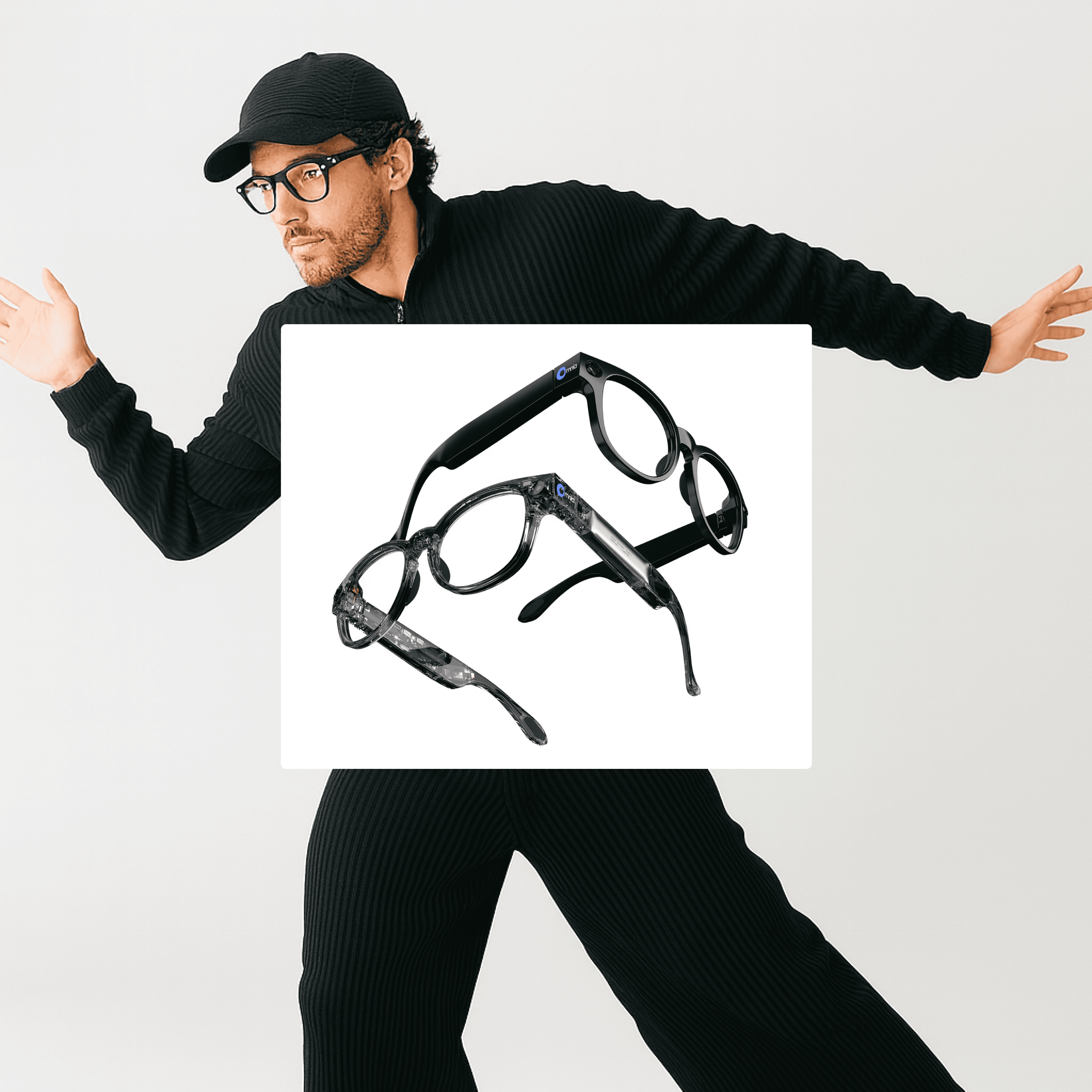
Turn any pair of smart glasses into a real-time window for AI-assisted work.
Omnia transforms head-mounted devices into powerful data engines—bridging humans, machines, and spatial environments through live context awareness.
One Runtime, Every Device.
The spatial computing market is expanding faster than it’s consolidating.
By 2026, more than 15 million AR-capable headsets and smart glasses will be in enterprise circulation — built across at least 8 distinct operating systems, each with its own SDK, rendering engine, and input model.
This fragmentation has created the same problem mobile apps faced before the era of web standards: developers must rebuild the same experience for every device, and enterprises can’t deploy one consistent workflow across multiple form factors.
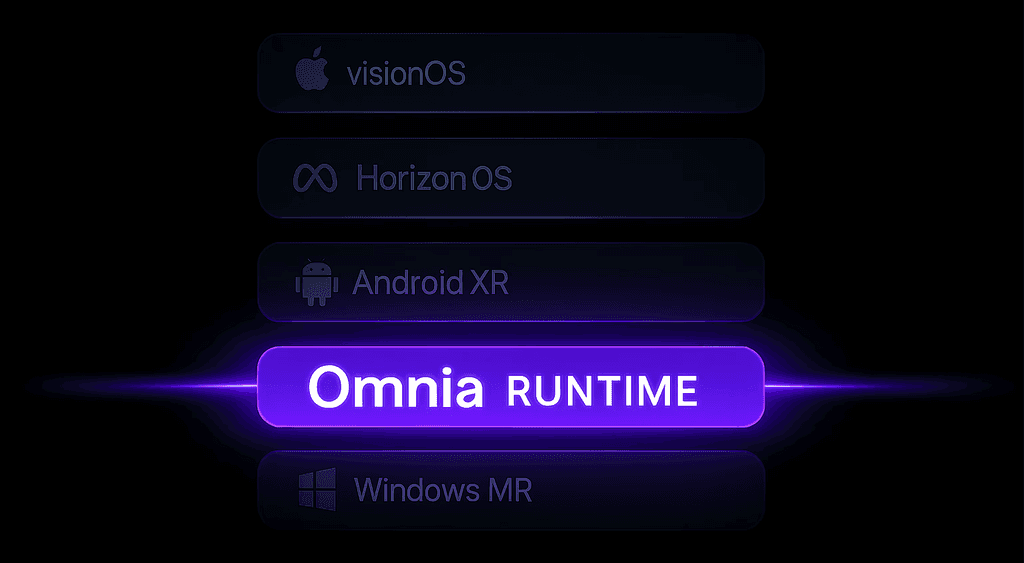
That’s why Omnia built WebSpatial Runtime — a cross-device, app-layer system that sits above proprietary OSes and unifies them through the web.
It turns spatial devices into a single, interoperable platform — allowing enterprises to deploy AI overlays, computer vision interfaces, and AR workflows everywhere: from Apple Vision Pro and Meta Quest to RealWear and next-generation industrial wearables.
Hands-Free Intelligence for the Modern Workforce.
AI Overlays in Real Time
Contextual instructions, object recognition, and digital twins are layered over the user’s FOV.
Voice & Gesture Commands
Operate fully hands-free through natural interaction.
Edge AI + Cloud Sync
Compute vision and analytics locally; sync securely to cloud dashboards when connected.
Enterprise Integrations
Compatible with APIs from SAP, Siemens, Autodesk, and digital twin environments.
AR Recording & Replay Record spatial sessions for audit, training, or robotic model generation.
Building the Foundation for Autonomous Vision.
Each task captured through Omnia’s smart glasses can be repurposed as synthetic training data for robotics and humanoid perception systems. Our runtime links human performance data with robotic learning models, accelerating simulation-to-real transfer for industrial and defense applications. Learn more here.


